 ultimate-guide
Private Boat Charter Safety Standards: What to Know
Last Updated: October 24, 2026
Quick Summary
Legal charter safety in NYC starts with federal rules: carrying paying passengers requires U.S. Coast Guard inspection, a Certificate of Vessel Inspection, and a licensed captain, and most small charters cap at six passengers. Vessels with more than six passengers need a licensed captain and full inspection, while six or fewer can operate under simpler bareboat and uninspected rules. Verify this before you book.
- Ask who will be at the helm, what license they hold, and how long they have sailed local waters.
- Required equipment typically includes life jackets for every passenger, fire extinguishers, and a working marine VHF radio.
- A reputable operator cancels for small craft advisories or thunderstorms and puts the refund policy in writing.
- Ask for the captain's name and license number before booking; legal operators share it without hesitation.
- An uninspected vessel advertising as a legal charter is the most common safety risk in this market.
Table of Contents
- Charter Safety Standards: Inspections, Equipment, and Passenger Limits
- How to Find Safe Boat Captains in NYC
- Your Private Boat Charter Safety Checklist
- Frequently Asked Questions
Charter Safety Standards: Inspections, Equipment, and Passenger Limits
Legal charter safety standards NYC operators must meet start with federal rules: carrying paying passengers requires U.S. Coast Guard inspection, a Certificate of Vessel Inspection, and a licensed captain, and most small charters cap at six passengers.
Vessels carrying more than six passengers need a licensed captain and full inspection under the passenger vessel regulations in the Code of Federal Regulations; six or fewer can operate under simpler bareboat and uninspected rules. This is the line between a legal charter and an illegal one, verify it before you book.
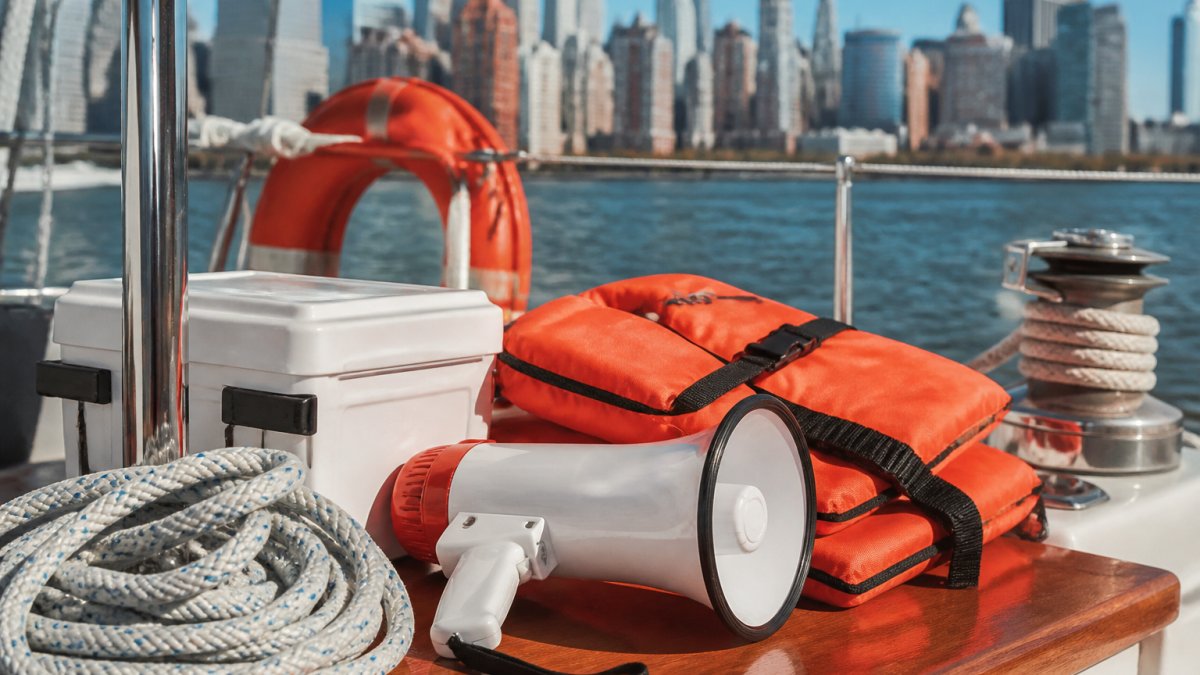
Required equipment on an inspected charter typically includes personal flotation devices for every passenger (child sizes included), fire extinguishers, visual distress signals, sound devices, navigation lights, a working marine VHF radio, first aid supplies, and a throwable flotation device.
Onboard rules vary by operator but commonly cover conduct, glass bottles, alcohol, smoking, and the marine head. Ask before boarding.
How to Find Safe Boat Captains in NYC
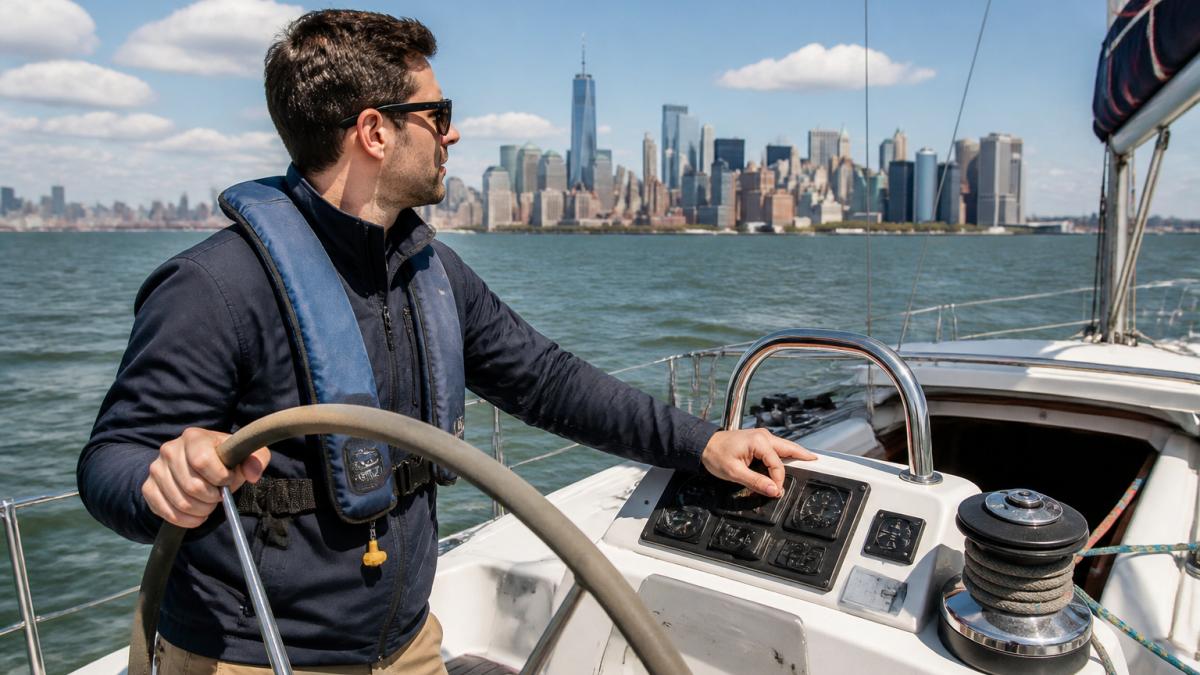
Finding a safe captain comes down to three checks: license, inspection paperwork, and local water experience. Ask who will be at the helm, what license they hold, and how long they have sailed local waters.
New York requires operators of recreational and for-hire vessels to hold a New York State boating safety certificate where applicable, and the Coast Guard requires a Merchant Mariner Credential for inspected passenger vessels. A captain who can name their license type without hesitation is a good sign.
Your Private Boat Charter Safety Checklist
Run this checklist before you pay a deposit.
| Check | What to Confirm | Why It Matters |
|---|---|---|
| Inspection certificate | Current Certificate of Vessel Inspection on board | Proves the vessel meets federal safety standards |
| Captain license | Merchant Mariner Credential or state certificate | Confirms the operator is legally qualified |
| Passenger count | Legal maximum stated in writing | Overloading is a top safety risk |
A reputable operator cancels for small craft advisories or thunderstorms and puts the refund policy in writing. Ask about a stable boarding ramp, child life jackets, and crew experienced with limited-mobility passengers.
For full safety policies, our FAQ page covers inspections, equipment, and onboard rules. When ready to sail, book a private NYC harbor charter or contact our team to confirm safety details.
Frequently Asked Questions
What safety equipment should a private charter boat have?
Every charter vessel should carry a U.S. Coast Guard-approved life jacket for each passenger, fire extinguishers, visual distress signals, a first aid kit, and a working VHF radio. If the boat has a head, it should be a functioning hand-pump toilet. Ask the operator to confirm the vessel passed its annual inspection and that the Certificate of Vessel Inspection is current. Required equipment should be checked before departure, not assumed.
How can I verify a charter boat captain's credentials?
Ask the operator for the captain's license and confirm it is a U.S. Coast Guard-issued credential, not just a state Safe Boating Certificate. Before booking, ask how many years the captain has sailed local waters. Legitimate charter operators answer these questions without hesitation.
What happens if weather conditions are unsafe for a charter?
A responsible charter operator monitors forecasts and will cancel or reschedule if conditions are unsafe. Ask about the private sailboat charter weather policy before you pay: who makes the call, how far in advance, and whether you receive a refund or credit. Get the policy in writing. If the captain decides to sail in marginal conditions, you can ask to reschedule. Safety decisions should never be negotiable.
Safety on the water comes down to verification, not marketing. Ask for the inspection certificate, confirm the captain's license, and get the weather policy in writing before you pay. At City Light Sailing NYC, our private harbor charters are built around exactly that standard: a licensed captain at the helm, a properly equipped vessel, and a relaxed, intimate sail for your group. Get started with City Light Sailing NYC and enjoy the skyline with confidence.