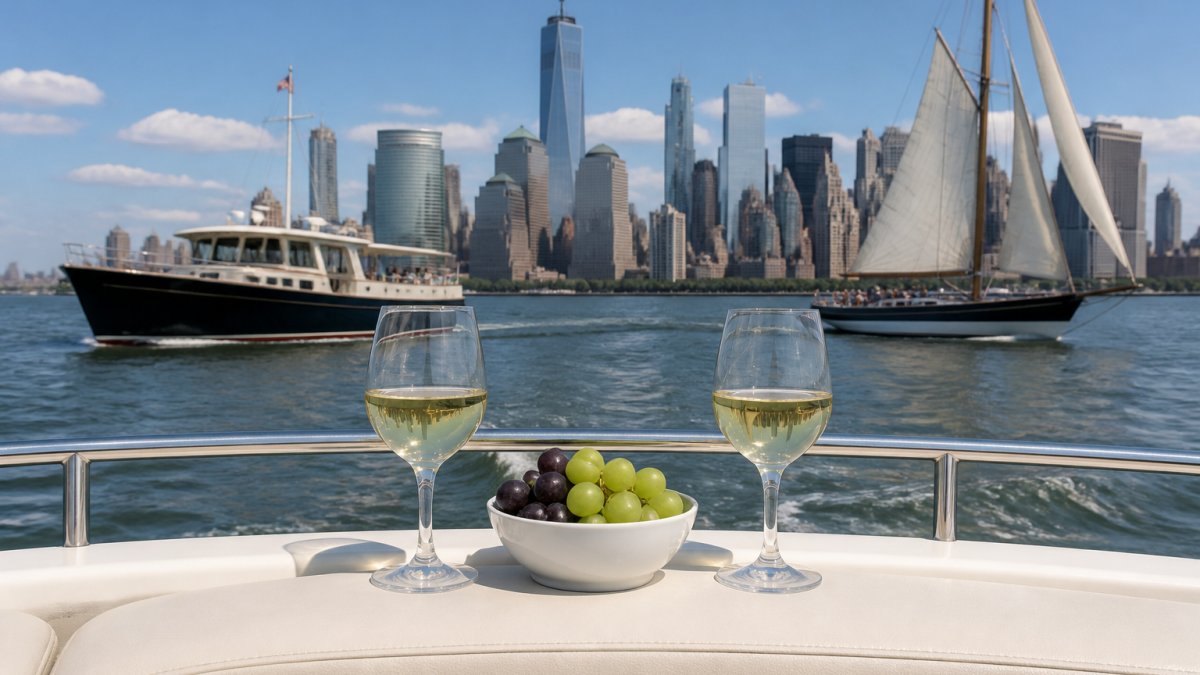
 comparison
Is a Private Boat Charter Worth It? 2026 Cost Guide
Table of Contents
- Private vs Public Boat Tours: What the Price Difference Actually Buys
- Private Sailboat Charter Cost: What You're Really Paying For
- Hidden Costs and Inclusions: What to Confirm Before You Book
- Luxury Private Boat Rental NYC: Who It Makes Sense For
- Customization, Privacy, and the Experience You Can't Get on a Shared Boat
- Safety, Crew Standards, and Weather Policy: What to Vet Before Booking
- Conclusion: When a Private Boat Charter Is Worth the Investment
- Frequently Asked Questions
Last Updated: October 2, 2026
Private vs Public Boat Tours: What the Price Difference Actually Buys
Is a private boat charter worth it? For most groups of six or fewer, yes. It gives your group the entire vessel, captain, and crew, with no strangers aboard and a route you help shape. You pay more than a shared ticket, but you buy privacy, flexibility, and a schedule that bends to you.
A shared excursion sells a seat. A private excursion sells the boat.
The gap shows up the moment you board. On a shared tour you queue, sit where you're told, and leave when the last passenger is back. On a private charter the captain builds the route around what you want to see.
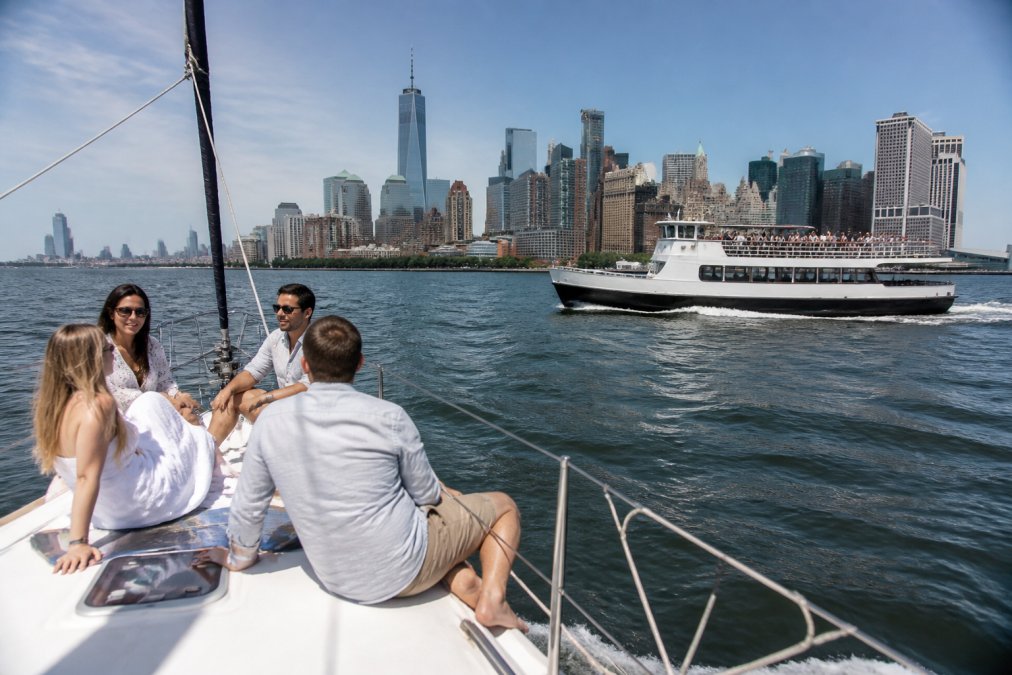
Shared tickets look cheap per person, but you're one of dozens. Divide a private charter by your group and the per-person pricing often lands closer to the shared rate than people expect. The real difference is what that money protects: your time, your guest list, and your moment.
A proposal, an anniversary, a milestone birthday: these are not events you want to share with forty strangers holding up phones.
Private Sailboat Charter Cost: What You're Really Paying For
Private sailboat charter cost depends on four things: vessel size, trip length, season, and add-ons. Any operator quoting a single sticker price without asking about your group is guessing.
How Operators Actually Price a Charter
Most operators price in blocks, not by the hour. A typical structure looks like this:
- Two-hour sail, the shortest block most operators will run, usually priced as a flat rate rather than hourly
- Half-day (four hours), the most common booking window for celebrations and proposals
- Full-day (six to eight hours), priced at a premium because the boat is off the market for the entire day
- Overtime, billed in 30- or 60-minute increments, often at a higher rate than the base block
Fixed Costs vs. Variable Add-Ons
Variable add-ons are where budgets drift. Common ones include:
- Fuel surcharges if your customized route runs long or fast
- Docking fees at certain marinas or piers
- Onboard amenities like catering, a bar package, or decorations
- Water sports equipment such as paddleboards or snorkel gear
- Extended time if you want to stay out past the booked window
Ask for an all-inclusive package quote bundling fuel, docking, and standard amenities into one figure, so you can compare charters on equal footing.
| Cost Type | Typically Included? | What to Confirm |
|---|---|---|
| Vessel and captain | Yes, always | Crew-to-guest ratio |
| Fuel | Sometimes | Whether surcharges apply |
| Docking fees | Rarely | Which piers are covered |
| Catering and bar | No | Per-person or flat rate |
| Water sports gear | Varies | What's aboard already |
Running the Per-Person Math
Take the all-inclusive quote, add the customary crew gratuity, then divide by the guests actually sailing.
Hidden Costs and Inclusions: What to Confirm Before You Book
Hidden costs are the fastest way to sour a great day on the water. The fix is a short list of questions asked before you pay a deposit.
Run through this checklist with every operator you're considering:
- Is fuel included, or billed separately?
- Are docking fees part of the rate?
- What's the cancellation and weather policy in writing?
- How many guests are included, and what's the max?
- Is gratuity for the crew expected, and is it added automatically?
- What onboard amenities come standard versus as an upgrade?
- Is there a cleaning or damage deposit?
- What is the deposit amount, and when is the balance due?
Two of these catch first-time charterers off guard.
Tipping Etiquette: The Cost Nobody Quotes You
Crew gratuity is customary on private charters in the United States and almost never included in the quoted rate, the most common surprise at the dock.
A few mechanics worth knowing:
- Cash is preferred. Crews split tips at the end of the day, and cash moves faster than a card or an app transfer.
- The captain often distributes. On a crewed boat, the captain typically pools and splits the gratuity. You don't need to tip each person individually.
- Service quality is the variable. A crew that sets up a proposal, handles the catering, and keeps glasses full is delivering more than a crew that just drives the boat. Tip accordingly.
- It is not automatic unless stated. If gratuity is auto-added to your contract, it will appear as a line item. If it isn't, budget for it separately.
Cancellation and Weather Policy: Read the Contract, Not the Website
- Who makes the call? The captain should have sole authority to cancel for safety. If the operator lets a customer pressure them into sailing in marginal conditions, that's a red flag.
- Refund or reschedule? Many operators offer a free reschedule rather than a cash refund. That's usually a fair trade, you keep your money in the experience, and they keep the booking, but only if the reschedule window works for you.
- What counts as "unsafe"? Some contracts define it narrowly (small-craft advisory, lightning within a set radius). Others leave it to the captain's judgment. Both can be fine; you just need to know which one you're signing.
- What about a light drizzle? Rain alone rarely cancels a charter. Wind, swell, and visibility are the real drivers. Don't assume a gray forecast means an automatic refund.
- Deposit terms. Confirm whether the deposit is refundable, transferable to another date, or forfeited. Transferable is the most common middle ground and the one most worth asking for.
- Customer-initiated cancellation. If you cancel for a non-weather reason, what's the notice window and what do you lose? This is usually the stricter side of the contract.
A contract that clearly spells out gratuity and weather-cancellation terms signals a professional operation. If either is vague, ask for clarification in writing.
Luxury Private Boat Rental NYC: Who It Makes Sense For
A luxury private boat rental NYC makes sense for a buyer who values the experience over the per-head price and has a reason to want the boat to themselves.
Private charters pay off for:
- Proposals and anniversaries, where timing and setup have to be perfect
- Milestone birthdays that need an intimate venue, not a rented hall
- Small groups of friends or family who want an uncrowded alternative to a packed harbor cruise
- Professionals hosting clients who need a high-end, customizable setting to impress
Customization, Privacy, and the Experience You Can't Get on a Shared Boat
Customization is the clearest thing a shared boat can't sell you. On a group tour the route and schedule are fixed; on a private charter you decide where to go and how long to linger.
Safety, Crew Standards, and Weather Policy: What to Vet Before Booking
Safety and crew standards are the least glamorous part of booking a charter, and the most important. A private charter is only as good as the captain running it.
Conclusion: When a Private Boat Charter Is Worth the Investment
A private boat charter is worth it when the occasion, group, or guest list makes privacy and control worth more than a cheaper seat. For a proposal, an anniversary, a milestone, or a small group that wants the harbor to itself, the math tips toward private.
Frequently Asked Questions
What is the average cost of a private boat charter?
Private boat charter costs depend on vessel size, duration, season, and included amenities, so there is no single average. Pricing typically reflects the whole-boat rate rather than per-person, and add-ons like catering, fuel surcharges, and docking fees can change the total. For the most accurate figure, contact the charter company directly and ask for a full breakdown of what is included before you commit.
Private vs public boat tours: which offers better value?
It depends on your group size and priorities. Public tours often have lower per-person pricing, but you share the boat with strangers and follow a fixed route. A private boat charter costs more upfront, yet the per-person cost drops as your group grows, and you gain itinerary flexibility, exclusive access, and a crew-to-guest ratio that feels personal rather than crowded.
How do you determine if a luxury boat charter is worth the investment?
Run a simple cost-benefit analysis: divide the total charter cost by your group size, then compare that per-person figure to what a shared excursion would cost for a similar duration. Factor in what you actually get for the difference, such as customized routes, privacy, and onboard amenities. If the occasion is a milestone or proposal, the experience value often outweighs the premium.
What should you look for when booking a private harbor charter?
Confirm the captain's credentials and crew experience, ask about the cancellation and weather policy in writing, and get a clear list of inclusions versus extra fees. Check the vessel's maintenance record and passenger capacity. Also ask about tipping expectations and whether fuel surcharges or docking fees apply. A transparent operator will answer all of these before you pay a deposit.