 listicle
Private Sailing Experience NYC Reviews: What to Know
Table of Contents
- Private Sailing Experience NYC Reviews: What Real Guests Say
- What to Expect on a Sunset Sail in the Harbor
- How to Read Private Sailing Experience Reviews
- Private Boat Charter Cost: What Affects Your Quote
- Vessel Types Compared: Schooners, Yachts, and Sailboats
- Accessibility and Photography Tips for Your Charter
- Conclusion: Choosing the Right Private Charter
- Frequently Asked Questions
Last Updated: October 4, 2026
Private Sailing Experience NYC Reviews: What Real Guests Say
If you are weighing a private sailing experience NYC reviews have to offer, most people describe the same three things: the quiet, the skyline, and how much better it felt than a packed harbor cruise. This guide from City Light Sailing NYC breaks down what guests actually say, what drives the cost of a private boat charter, and how to pick the right vessel for your group.
The single biggest complaint in negative reviews is not the boat. It is surprise fees and unclear timing. Guests who felt informed ahead of time almost always rated their trip higher, regardless of operator.
So how do you read a private sailing review without getting fooled?
Federal Trade Commission guidance on online reviews and endorsements
What to Expect on a Sunset Sail in the Harbor
A sunset sail typically runs two to three hours, departs from a Manhattan or Brooklyn marina in the late afternoon, and returns after dark.
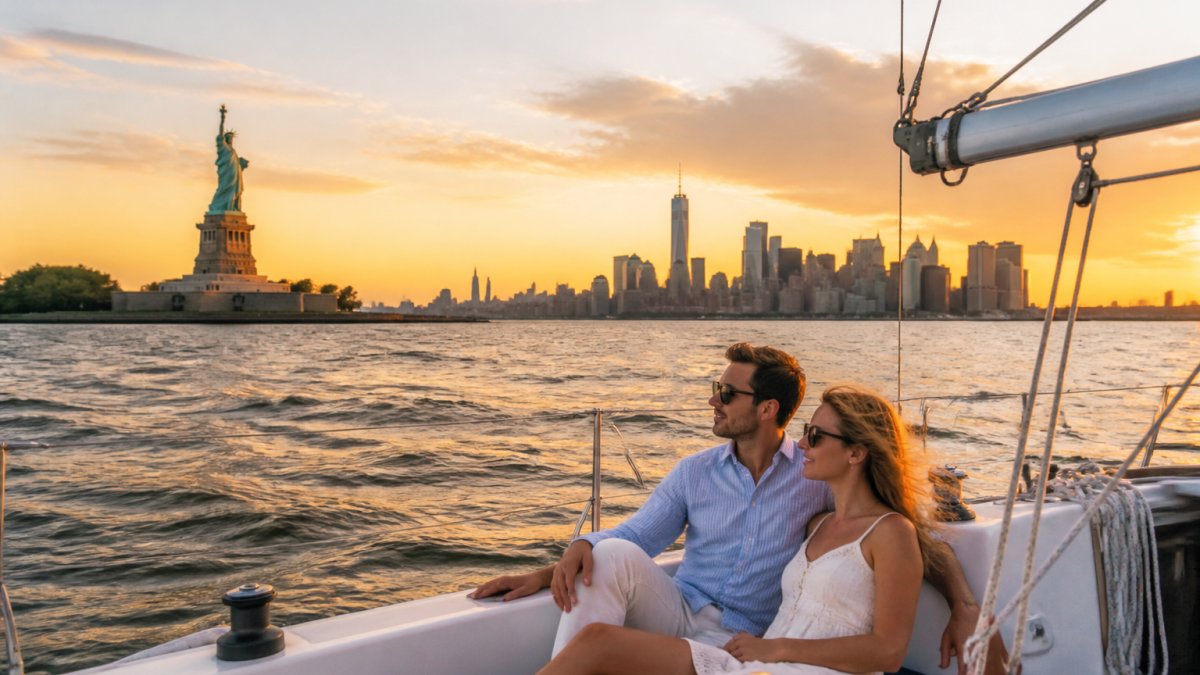
Timing matters more than most first-timers expect. Sunset shifts by more than an hour between spring and fall, so a June departure looks nothing like an October one. A good operator builds the itinerary around that window rather than a fixed clock.
Timing, Skyline Views, and the On-Board Atmosphere
The atmosphere on a private vessel is what guests mention most: no crowds, no queue for the rail, no competing for a photo angle. You get the skyline views, the harbor breeze, and your own group, exactly why people book private over public.
Most private sailboats come with a cooler, deck seating, and often bluetooth audio. Climate control below deck varies by vessel type, so ask before you book rather than assuming.
How to Read Private Sailing Experience Reviews
Read reviews for patterns, not single opinions. One glowing review tells you almost nothing; twenty mentioning the same captain, punctuality, and hospitality tell you the operation is consistent.
Here is what we look for when sorting real feedback from noise:
- Specificity. "Captain was great" is weak. "Captain pointed out the Brooklyn Bridge history and timed the sail so we hit the Statue at sunset" is useful.
- Recency. A five-star review from four years ago describes a boat and crew that may not exist today.
- Balance. Reviews that mention one small drawback read more honest than perfect scores across the board.
- Photos. Guest photos show the actual vessel, seating, and sightlines, not a marketing shot.
- Response. How a company replies to a critical review says more about its customer service than the review itself.
Private Boat Charter Cost: What Affects Your Quote
Private boat charter cost in the harbor is quote-based, which is why almost no operator publishes a rate card. But quotes are built from a handful of cost drivers you can ask about directly, so you can compare operators apples-to-apples instead of guessing which number is "fair."
The variables that move your quote the most:
- Vessel size and Coast Guard capacity. Under U.S. Coast Guard rules, a vessel's maximum passenger count is set by its Certificate of Inspection or by small-passenger-vessel limits. A boat rated for six guests and one rated for forty have very different insurance, crew, and dock requirements, and that gap shows up in the quote first.
- Crew ratio. A bare six-pack charter may run with a single captain. Larger yachts add a mate, and often a steward or deckhand. Every additional crew member is a line item.
- Duration blocks. Most operators price in two-, three-, or four-hour blocks, and the marginal hour is usually cheaper because dock prep, fuel-up, and crew call time are already sunk.
- Day and time. Friday and Saturday evenings, holiday weekends, and the weeks around the Fourth of July and New Year's Eve carry the highest rates. A Tuesday afternoon in May and a Saturday at sunset in September are not the same product.
- Fuel and dock fees. Some quotes fold fuel and marina fees into the total; others add them after the sail. Ask which model applies, because a "cheaper" quote with fuel billed separately can land above a flat-rate competitor.
- Add-ons. Catering, a photographer, a florist, a customized route, or a longer Statue of Liberty pass all change the total. So does a request to leave from a different marina than the operator's home dock.
Budget-Friendly vs. Luxury Tiers
The category splits into three rough tiers. Treat the ranges below as planning bands, not published rates, actual quotes vary, so always ask for a written breakdown.
| Tier | Typical Group Size | What You Get | Typical Booking Window | Best For |
|---|---|---|---|---|
| Budget / intimate | 2-6 guests | Smaller sailboat, 2-hour route, BYO food and drinks, single captain | Days to 1 week out | Casual couples, first-timers, proposal setups on a smaller boat |
| Mid-range | 6-12 guests | Private captain, 2-3 hour flexible route, cooler and bluetooth audio, some seating below deck | 2-4 weeks out | Anniversaries, small birthdays, family groups |
| Luxury | 12+ guests | Larger yacht, full crew, catering, climate-controlled salon, custom itinerary | 1-3 months out, longer for holidays | Milestone events, corporate groups, multi-family celebrations |
Two things push a booking up a tier fastest: guest count crossing a Coast Guard capacity threshold, and a request for catering or a dedicated photographer. If your group sits at seven or thirteen guests, ask whether stepping down by one person drops you into a cheaper vessel class, it often does.
U.S. Coast Guard Office of Commercial Vessel Compliance, passenger vessel requirements
Vessel Types Compared: Schooners, Yachts, and Sailboats
The vessel you choose shapes the whole experience. A classic schooner gives you the historic sailing feel, with more guests and a steadier ride. A modern yacht offers speed, space, and climate control. A smaller sailboat is the most intimate, which is why it suits proposals and romantic getaways best.
National Weather Service marine forecasts and small craft advisories
| Vessel Type | Capacity | Feel | Best For |
|---|---|---|---|
| Classic schooner | Larger groups | Historic, steady, social | Group charters, scenic route |
| Luxury yacht | Medium to large | Spacious, comfortable, climate controlled | Corporate events, milestone parties |
| Private sailboat | Small groups | Intimate, hands-on, quiet | Proposals, anniversaries, couples |
A common mistake is booking the biggest boat available. Bigger is not better if you wanted intimacy. Match the vessel to the moment, not the headcount.
Accessibility and Photography Tips for Your Charter
Most booking pages skip these two topics entirely, which is why they are worth a few extra minutes before you reserve. Accessibility and photography both depend on vessel- and dock-specific details, and both are easier to plan for than to fix on the day of the sail.
Accessibility and Mobility: What to Ask Before You Book
There is no single accessibility standard across the harbor's charter fleet. Some vessels and marinas are genuinely step-free; many are not.
Questions that get you a useful answer:
- Boarding method. Is there a stable gangway, a ramp, or a step-down from the dock? How many steps, and are there handrails on both sides?
- Dock surface and slope. Floating docks move with the tide and can be slippery. Ask about the surface, the ramp angle at your departure time, and whether staff can assist.
- Deck layout. Are there level areas to sit, or is the deck stepped and sloped? Is there a head (restroom) below deck, and how many steps down is it?
- Seating. Are there fixed benches with back support, or only open cockpit seating? For guests who need back support, this matters more than the boat's size.
- Mobility devices. Can a folding wheelchair or walker be stowed on board? Is there space to maneuver it, or does it need to stay at the dock?
- Crew assistance. Will a crew member be dedicated to helping guests board and move around, or is the captain handling lines and sailing solo?
A practical rule: if anyone in your group uses a cane, walker, or wheelchair, or has balance or stamina concerns, describe the specific need when you inquire rather than asking a generic "is it accessible?" question. Operators who can accommodate will tell you exactly how; those who cannot usually say so once the question is specific.
Photography: Timing, Gear, and Getting the Shot
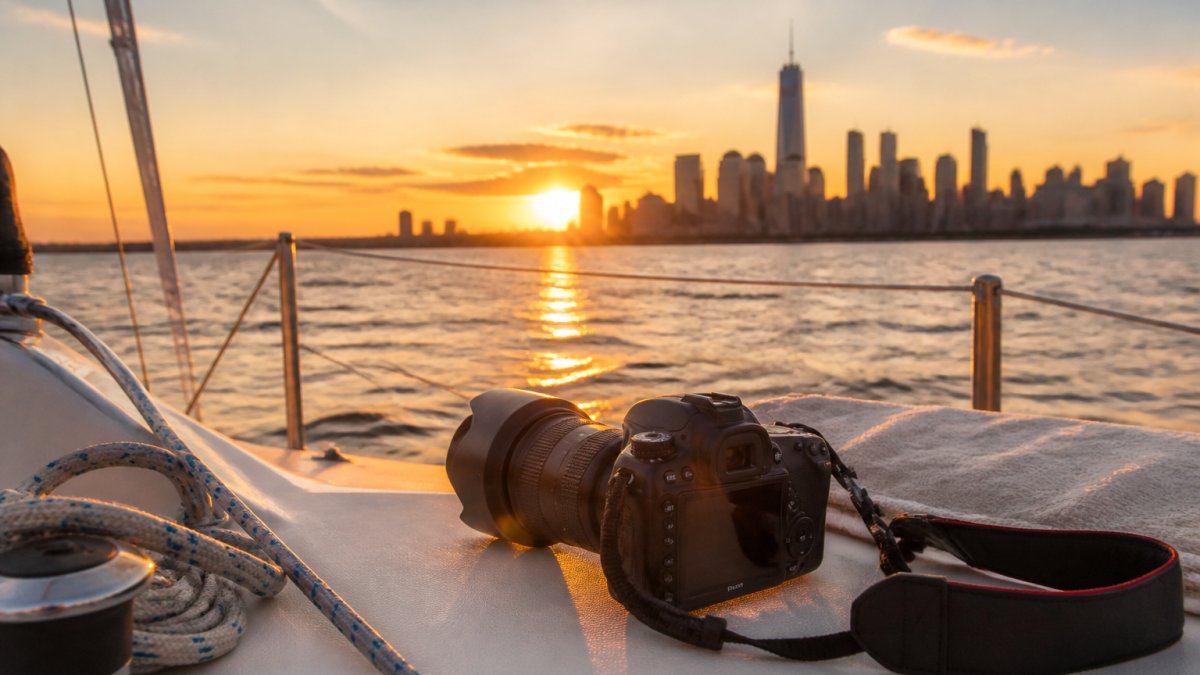
Light is the whole game on a harbor sail. The best skyline images come in the hour before sunset (warm, directional light on the buildings) and the twenty to thirty minutes after, when the sky still holds color and the city lights come up, the blue hour.
A few practical notes:
- Lens choice. A standard zoom (roughly 24-70mm equivalent) covers most skyline and group shots. A longer lens (70-200mm equivalent) compresses the Statue of Liberty against the skyline but is harder to hand-hold on a moving deck.
- Stabilization and shutter speed. The boat is always moving. Bump your shutter speed up, brace against the mast or a rail, and shoot in short bursts rather than single frames.
- Polarizing filter. A circular polarizer cuts glare off the water and deepens the sky, which helps on bright afternoons. It costs roughly a stop and a half of light, so plan for it at golden hour.
- Phone shooters. Lock exposure on the skyline rather than the dark water, and turn off the flash, it will not reach anything and will only light up the deck.
- Ask the captain about position. On a sailing vessel the boat heels, and the side facing the Statue of Liberty depends on the point of sail and wind direction that day. Ask which side will have the cleanest sightline as you approach, and whether they can hold a heading while you shoot.
- Battery and cold. Evening sails are cool and damp. Keep a spare battery warm in a pocket; cold drains phone and camera batteries faster than most people expect.
If photography is a priority, say so when you book. A captain who knows you want the Statue at golden hour will often adjust the route order to make it happen, one of the quiet advantages of a private charter over a scheduled group sail.
Conclusion: Choosing the Right Private Charter
The hard part of booking a private charter is not finding a boat. It is finding one that matches your group, your budget, and the moment you are trying to create.
At City Light Sailing NYC, we built our charters around exactly that idea.
Get started with City Light Sailing NYC and book a private harbor sail that feels like it was made for your group.
Frequently Asked Questions
How much does a private sailing charter cost?
Private boat charter cost depends on vessel size, trip length, day of the week, and included amenities, so most operators quote per booking rather than per person. Public cruises start lower because you share the boat with strangers. For an exact figure on a private sailing experience, request a quote directly from the operator, since rates shift by season and availability.
What is included in a private sunset sail?
Most private charters include the boat, a licensed captain, crew, fuel, and access to on-board amenities such as Bluetooth audio and climate-controlled cabins. Food and drinks vary: some operators allow BYOB, while others offer catering add-ons. Confirm what to expect on a sunset sail with your specific operator, including departure time, docking location, and whether gratuity is built into the rate.
How many people can fit on a private sailboat charter?
Boat capacity varies by vessel. Smaller sailboats typically host 2 to 6 guests, mid-size yachts handle 10 to 20, and larger schooners can accommodate more for group charters. If you want an intimate experience for a proposal or anniversary, book a vessel rated for your exact party size so the deck never feels crowded.
What should I look for in private sailing experience reviews?
Focus on reviews that mention punctuality, captain professionalism, vessel maintenance, and how the crew handled weather changes. Photos from real guests show what the boat actually looks like. Reviews that describe a specific celebration, such as a proposal or birthday, tell you more than generic five-star ratings because they reveal how the team handles custom requests.