 blog
blog
Tribeca Sailing vs Classic Harbor Line: 2026 Comparison
Table of Contents
- Tribeca Sailing vs Classic Harbor Line: A Side-by-Side Comparison
- Vibe and Atmosphere: Intimate Experience vs Ticketed Boat Ride
- Boat Size, Vessel Capacity, and Crowd Density
- Narration, Tour Style, and Route Highlights
- Public Harbor Cruise vs Private Charter: Which Format Fits Your Group?
- Sailing Charter Duration and Seasonal Schedule
- Booking a Private Sailboat Charter: Pricing, Inclusions, and Accessibility
- Weather Contingency Policies and Boarding Experience
- Frequently Asked Questions
Last Updated: September 14, 2026
Tribeca Sailing vs Classic Harbor Line: A Side-by-Side Comparison
Choosing between Tribeca Sailing and Classic Harbor Line comes down to one question: do you want a small, private sailboat charter or a ticketed boat ride shared with dozens of strangers? This guide from City Light Sailing NYC breaks down both options on vessel size, atmosphere, route, pricing structure, and weather policy so you can book with confidence.
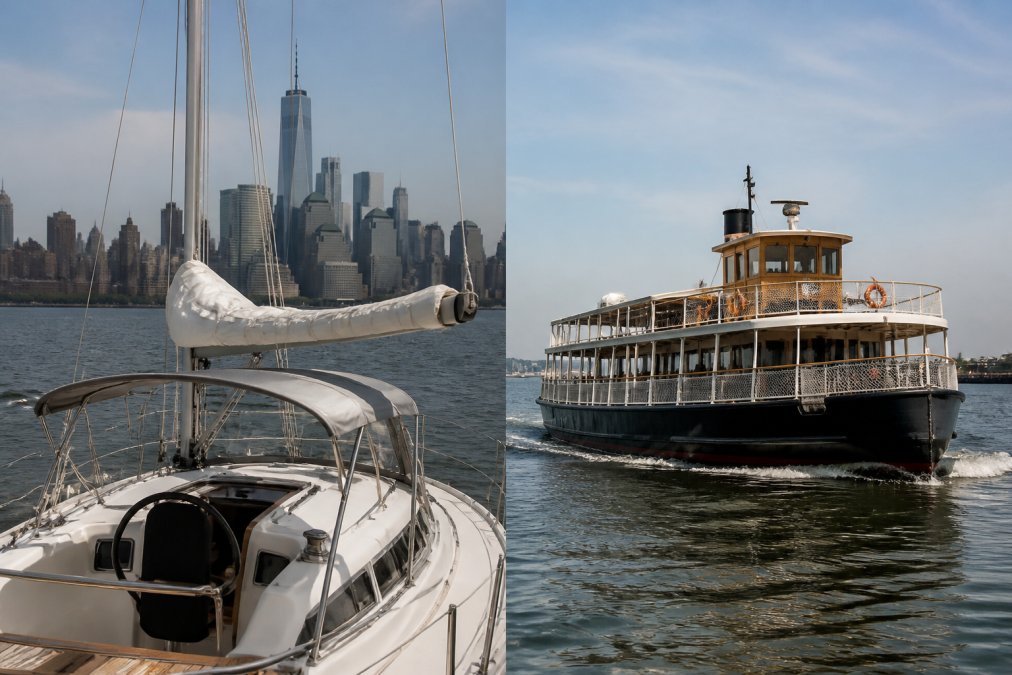
Tribeca Sailing is a boutique sailing operator offering intimate, small-group sails from the west side of Manhattan. Classic Harbor Line is a larger harbor cruise company running schooners and motor yachts on scheduled departures. Both get you onto the water with skyline views. They deliver very different experiences.
Here's the core tension: one sells a seat on a boat, the other sells the boat. Below, we'll compare them across eight practical categories, including the accessibility and weather policies most comparison guides skip.
Tribeca Sailing at a Glance
A boutique sailing operator built around small vessels and a relaxed, personal feel. Expect a handful of guests rather than a crowd, hands-on time with the crew, and a route that hugs the lower harbor and the Statue of Liberty. Best for couples and small groups who want a quiet sail rather than a narrated attraction.
Classic Harbor Line at a Glance
A larger harbor cruise company running classic-style schooners and motor yachts on fixed schedules. Departures are ticketed, capacity is higher, and the format leans toward a structured sightseeing tour with food and beverage service. Best for visitors who want a guaranteed departure time and a traditional tourist attraction experience.
Vibe and Atmosphere: Intimate Experience vs Ticketed Boat Ride
The atmosphere split is the single biggest difference between these two operators. A private sailboat charter feels like a gathering of friends; a ticketed harbor cruise feels like a well-run attraction. Neither is wrong, but they suit different moods.
On a small sail, conversation is the soundtrack. You hear the wind, the water against the hull, and your own group talking. On a larger ticketed cruise, you get a hosted, social atmosphere with other passengers, a bar, and often live narration.

Boat Size, Vessel Capacity, and Crowd Density
Vessel capacity drives everything else: crowd density, boarding speed, how much room you have at the rail, and whether you can move around freely. Larger vessels carry more people; smaller sailboats carry fewer.
Crowd density is the practical metric here. On a small sailboat, you can typically find a spot at the rail whenever you want. On a full ticketed cruise, popular departure times can mean standing room and shared sightlines.
- Small private sailboats: usually under a dozen guests
- Classic schooners and yachts: capacity in the dozens to low hundreds
- Boarding: private charters board as a group; ticketed cruises board in a queue
Narration, Tour Style, and Route Highlights
Tour style separates a guided maritime tour from a free-form sail. Ticketed cruises often include live narration pointing out landmarks; private sails tend to be conversational and flexible, with the crew answering questions as they come up.
Route highlights overlap more than you'd expect. Both formats typically take in the Statue of Liberty, Ellis Island, the skyline, and the harbor bridges. The difference is pacing and flexibility. A private charter can linger where your group wants; a scheduled cruise follows a set route and timeline.
According to National Park Service information on Statue of Liberty and Ellis Island, these landmarks anchor most harbor routes, so the sights are similar even when the experience isn't.
Public Harbor Cruise vs Private Charter: Which Format Fits Your Group?
A public harbor cruise is a shared, ticketed departure open to anyone. A private charter is an exclusive booking of the vessel for your group alone. The right choice depends on occasion, group size, and how much control you want over the itinerary.
Choose a private charter for proposals, anniversaries, milestone birthdays, and small celebrations where the moment matters. Choose a public cruise when you want a lower-commitment outing, a fixed departure time, and the energy of a shared crowd.
| Factor | Public Harbor Cruise | Private Charter |
|---|---|---|
| Who's aboard | Mixed ticketed guests | Your group only |
| Schedule | Fixed departures | You choose timing |
| Itinerary | Set route | Customizable |
| Best for | Casual sightseeing | Celebrations, proposals |
| Atmosphere | Social, hosted | Intimate, relaxed |
Sailing Charter Duration and Seasonal Schedule
Sailing charter duration typically runs from about 90 minutes on a short harbor sail to two or three hours for a full sunset or evening charter. Longer private bookings are common for celebrations that want dinner, toasts, and time to linger.
Seasonal schedule matters in this market. Sailing operators generally run from spring through fall, with peak demand on weekend evenings and around holidays. Ticketed cruise companies often extend into colder months using climate-controlled cabins, while open-air sailing is more weather-dependent.
- Short sail: roughly 90 minutes
- Standard sunset sail: about two hours
- Celebration charter: two to three hours or more
Booking a Private Sailboat Charter: Pricing, Inclusions, and Accessibility
Pricing is where the two formats diverge most sharply, and it's the question every planner asks first. The key mechanic: a private sailboat charter is quoted per booking, while a ticketed harbor cruise is sold per seat. That single difference changes how you should budget.
How private charter pricing works. Operators typically quote a flat rate for a defined time block (commonly a 90-minute, two-hour, or three-hour sail), and that rate covers the vessel and crew regardless of whether two people or ten people board. The practical result: the per-person cost falls as your group grows. A two-hour sunset sail priced as one booking looks expensive for a couple and quite reasonable split across eight guests. Add-ons, catering, a champagne or wine package, extended time, a specific departure window, are usually priced separately on top of the base rate.
How ticketed cruise pricing works. A scheduled cruise sells individual seats at a published per-person fare, often tiered by time of day and season. Weekend sunset departures and holiday dates carry the highest fares; weekday and daytime departures are cheaper. Because you're buying a seat, your cost scales linearly with headcount, a group of eight pays eight fares, and there's no volume discount built into the model.
The break-even question. The useful way to compare is total cost for your actual group size. Price the private charter as one booking, then price the ticketed cruise as (fare × number of guests). For small groups of two to four, ticketed cruises are frequently the lower total; for larger groups, the flat private rate often wins on both total cost and exclusivity. Run both numbers before you decide.
Inclusions to confirm in writing. Ask specifically about:
- Crew and fuel (should be included in a charter rate)
- Beverages, included, cash bar, or BYOB
- Food, catered, snack-only, or none
- Gratuity, built in or expected on top
- Taxes and any dock or fuel surcharges
The most common first-timer complaint is surprise add-ons, so get the full itemized picture before paying a deposit.
Deposits and cancellation terms. Private charters commonly require a deposit to hold a date, with the balance due closer to departure. Ticketed cruises usually charge in full at booking. Read the cancellation window carefully, it interacts directly with the weather policy below.
Accessibility and boarding: ask these exact questions. Accessibility varies boat to boat, not brand to brand, so a generic website statement tells you little. Before booking, ask:
- Is there a ramp, or are there stairs and a gangway to the dock?
- What is the step height from dock to deck, and is there a handrail?
- Can the vessel accommodate a wheelchair or mobility aid, and is there space to stow it?
- Is there a marine head (restroom) aboard, and is it accessible?
- Can crew provide boarding assistance, and is there a weight or mobility limit?
Small sailboats often have a lower freeboard (deck height above water) than large schooners, which can make stepping aboard easier, but the dock, tide, and gangway configuration matter just as much as the boat. A mismatch at the pier ruins a celebration, so confirm the specifics in writing rather than assuming.
Weather Contingency Policies and Boarding Experience
Weather policy is the detail most comparison guides skip, and it's the one that protects your money. Sailing depends on wind and conditions, so the operator, specifically the captain, makes the final call on whether a trip runs. What matters is what happens to your payment when that call goes against you.
The three outcomes to know. When a trip is canceled for weather, operators handle it in one of three ways:
- Refund, money returned to your card. The cleanest outcome, but not universal.
- Credit, a voucher toward a future booking, often with an expiration window.
- Reschedule, you move to another date, subject to availability.
Ask which applies, and get it in writing. A credit that expires before your next visit is worth less than a refund.
Who decides, and when. The captain monitors forecasts and typically makes the call within a set window before departure, commonly a few hours out. Ask for that window so you're not left guessing the morning of your sail. A light rain alone rarely cancels a trip; high wind, thunderstorms, and unsafe sea state do. That distinction matters because it determines whether you'll actually be on the water.
Indoor vs. outdoor seating in bad weather. This is the sharpest practical difference between the two formats:
- Open-air sailboats generally have little to no enclosed cabin. If it rains, you get wet, and there's limited shelter. Some vessels have a small covered area or bimini top, but it won't keep a full group dry.
- Larger schooners and motor yachts often have a climate-controlled, enclosed salon with windows, so a rainy or chilly day still works. This is why ticketed cruise companies can extend their season into colder months while open-air sailing stays weather-dependent.
If your date is fixed and you can't tolerate a rain-out, the enclosed-cabin format is the safer bet. If you're flexible and want the open-air experience, book a private sail and keep a backup date in mind.
Seasonal availability, tied to weather. Open-air sailing generally runs spring through fall, with peak demand on weekend evenings and around holidays. Enclosed vessels stretch into the colder months. If you're planning a shoulder-season date, confirm whether your specific vessel is open-air or enclosed before you commit.
Boarding experience by format.
- Private charter: you typically meet the captain at the dock, board together as a group, and get a short safety briefing before casting off. Boarding is quick and personal.
- Ticketed cruise: you board in a queue with other passengers, so arrive early and expect a walk to the vessel. Popular departures mean a longer line.
Credentials to check. Any operator carrying passengers for hire should have a licensed captain and meet U.S. Coast Guard requirements for the vessel and route (uscg.mil). For general boating safety expectations, the U.S. Coast Guard boating safety resources are a useful reference when evaluating any operator's credentials.
Frequently Asked Questions
What is the difference between a private charter and a public sailing cruise?
A public sailing cruise puts you on a shared vessel with dozens of other passengers, often following a fixed route and schedule. A private charter, like those offered by City Light Sailing NYC, reserves the entire boat for your group. You control the guest list, the timing, and often the route. Private charters suit proposals, anniversaries, and milestone birthdays where an intimate experience matters more than a low per-person ticket price.
How long does a typical sailing charter duration run?
Sailing charter duration varies by operator and booking type. Public harbor cruises often run 60 to 90 minutes, while private charters typically last two to three hours. Some operators offer extended sunset sails or custom timeframes. When comparing Tribeca Sailing vs Classic Harbor Line, check whether the listed duration includes boarding and disembarking time, since that affects how much actual sailing you get.
Are sailing cruises in the harbor seasonal?
Most NYC sailing operators run from spring through fall, roughly April to October, though some extend into November or offer limited winter trips. Seasonal schedules affect availability for proposals and celebrations, so book early for peak weekends.
What should I expect from a private sailboat charter?
A private sailboat charter gives your group exclusive use of the vessel, a captain and crew, and a customizable route past landmarks like the Hudson River waterfront and New York Harbor. Expect an intimate experience with skyline views, photo opportunities, and a relaxed pace. Pricing depends on group size, date, and trip length, so contact City Light Sailing NYC directly for current rates and what is included.