 blog
blog
Best Private Boat Rental NYC Harbor: 2026 Guide
Table of Contents
- Why a Private Boat Rental Beats a Crowded Harbor Cruise
- Private Yacht Charter Cost: What Drives the Price
- How to Book a Private Boat Charter: Step by Step
- Harbor Cruise Duration: How Long Should You Sail?
- Capacity, Crew, and Safety: What to Expect Onboard
- Weather, Cancellations, and Accessibility: What Other Providers Skip
- Catering, BYOB, and Onboard Amenities
- Frequently Asked Questions
Last Updated: September 13, 2026
Why a Private Boat Rental Beats a Crowded Harbor Cruise
A private boat rental is the practice of chartering an entire vessel, captain and crew included, for your exclusive use on the water. For anyone searching for the best private boat rental NYC harbor options, the difference between a shared harbor cruise and a private charter comes down to one thing: control. You choose the departure time, the route, the music, and the guest list.
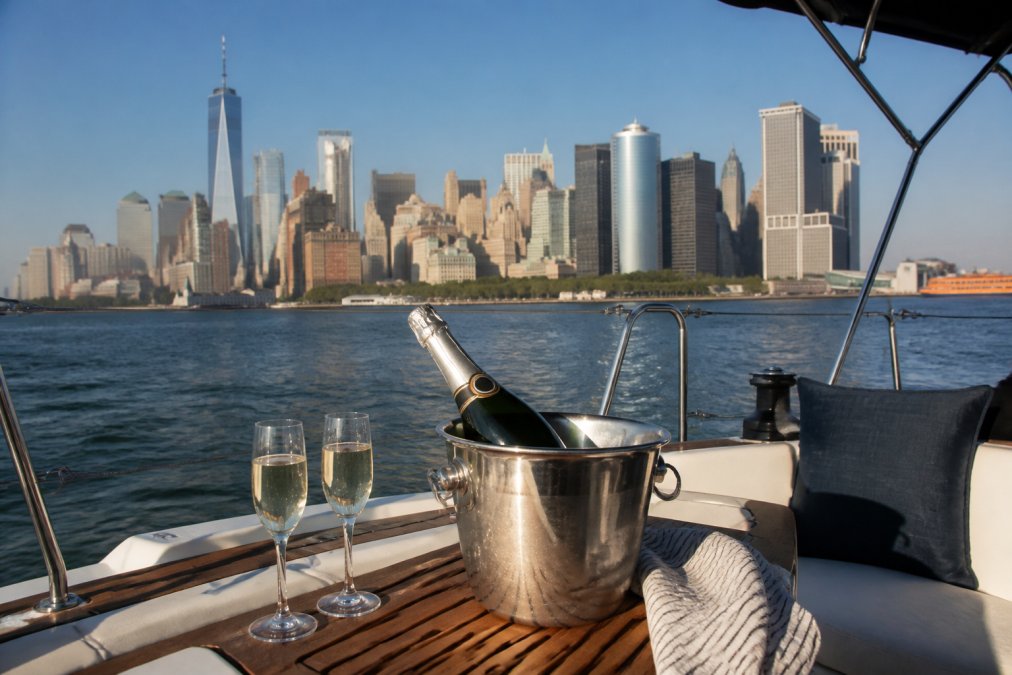
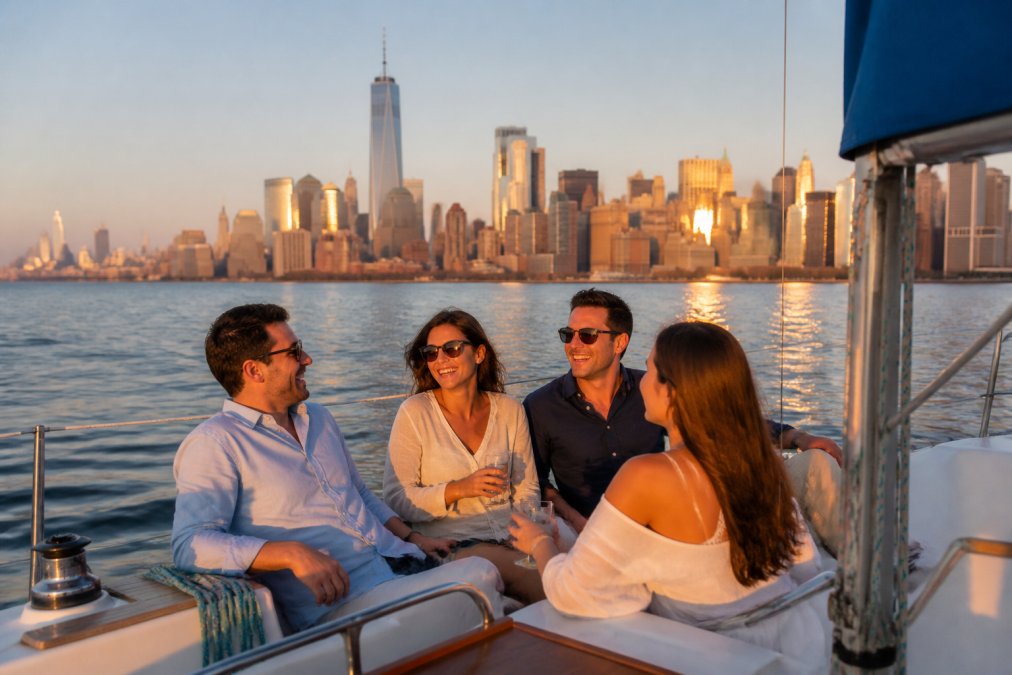
A private sailboat offers an intimate setting to enjoy the world's most iconic skyline with your favorite people. You step aboard, the captain casts off, and the harbor becomes yours.
Private Yacht Charter Cost: What Drives the Price
The cost of a private yacht charter depends on four variables: vessel size, trip duration, day of week, and season. A weekend sunset slot in summer costs more than a Tuesday morning in April. That's the honest answer, and anyone quoting you a flat number before asking those questions is guessing.
Most operators price by the hour, with a minimum booking window that typically runs two to three hours. The hourly rate climbs with passenger capacity, because a larger vessel requires more crew and burns more fuel. As a general pattern, smaller sailboats and motor yachts in the 30- to 40-foot range sit at the lower end of the market, while larger vessels with full catering and bar service command premium rates. Peak season, roughly May through September, can push rates 20-40% above shoulder-season pricing, and holiday weekends sit at the top of that range (Will Boat Prices Ever Come Down?).
How Operators Structure the Rate
Understanding the rate structure helps you compare quotes apples to apples. Most charters fall into one of three pricing models:
- All-inclusive: One hourly or flat rate covers fuel, crew, standard non-alcoholic beverages, and sometimes light snacks. Easier to budget, but the base rate is higher.
- Base rate plus add-ons: A lower quoted rate with fuel, gratuity, catering, and dockage billed separately. This is where surprise bills originate.
- Per-person pricing: Less common for private charters, but some operators quote per head with a minimum guest count. Confirm whether the minimum applies even if fewer guests attend.
Hidden Costs to Ask About Before You Pay a Deposit
Ask about these line items before you commit, because they're the ones that turn a quoted rate into a surprise bill:
- Fuel surcharge: Some operators fold fuel into the rate; others bill it separately based on route length. A longer route around the harbor or out past the bridges can add a meaningful surcharge.
- Gratuity: Crew tips are customary and usually not included in the quoted price. A common industry expectation is 15-20% of the charter fee, though it is always at your discretion.
- Catering and BYOB fees: Corkage or service charges may apply if you bring your own food and drinks. Some operators prohibit outside alcohol entirely due to licensing requirements.
- Docking location surcharges: Departing from a premium marina can add a fee. If you want to board at a specific location for convenience, ask whether that marina charges the operator a fee that gets passed to you.
- Extended-time penalties: Overtime is often billed at a higher hourly rate than the base charter rate. Confirm the overtime rate in writing before you board.
- Cleaning or damage deposits: Some operators hold a refundable deposit against excessive cleaning or damage. Ask what triggers a deduction.
Questions That Reveal the True Total
When you request a quote, ask these four questions to surface the real number:
- Is fuel included in the quoted rate, or billed separately?
- Is gratuity included, and what is the customary range?
- Are there any dockage, marina, or boarding-location fees?
- What is the overtime rate if we return late?
How to Book a Private Boat Charter: Step by Step
Booking a private boat charter takes four steps: pick your date and duration, choose a vessel that fits your group, confirm the itinerary, and sign the charter agreement.
Here's the sequence that avoids back-and-forth:
- Set your date, time, and guest count. Sunset slots and weekend evenings book out first, so start early.
- Match the vessel to your group size. Passenger capacity is a hard legal limit, not a suggestion.
- Request itinerary customization. Tell the captain what you want to see, whether that's a statue of liberty cruise, a Hudson River navigation loop, or a quiet anchorage.
- Review the charter agreement. Confirm the total price, cancellation policy, and what's included.
- Pay the booking deposit. This locks your slot; the balance is typically due before boarding.
- Confirm your boarding pass details. Get the marina departure address and arrival time in writing.
What to Confirm in the Charter Agreement
The charter agreement is your protection. Read it for the cancellation policy, the weather contingency clause, the deposit refund terms, and the gratuity expectation. If a provider won't put those in writing, walk away.
U.S. Coast Guard boating safety resources
Harbor Cruise Duration: How Long Should You Sail?
The ideal harbor cruise duration is two to three hours for a sunset or sightseeing trip, and three to four hours for a celebration with catering. That window gives you time to leave the marina, sail past the major landmarks, and settle into a relaxed pace without rushing back.
Shorter trips feel rushed once you account for boarding and docking. Longer trips suit weddings, corporate events, and milestone birthdays where the boat itself is the venue.
| Trip Type | Suggested Duration | Best For |
|---|---|---|
| Quick sightseeing | 2 hours | First-timers, photo stops |
| Sunset cruise | 2-3 hours | Dates, proposals, anniversaries |
| Celebration charter | 3-4 hours | Birthdays, corporate events |
| Full evening event | 4+ hours | Weddings, large parties |
Capacity, Crew, and Safety: What to Expect Onboard
Passenger capacity and crew size are set by the vessel's safety certification, and reputable operators won't exceed either. Under U.S. Coast Guard regulations, a vessel's maximum passenger capacity is determined by its Certificate of Inspection (for inspected vessels) or by the manufacturer's capacity plate and the operator's compliance with applicable regulations (for uninspected vessels). This is a legal limit, not a suggestion, exceeding it is a violation and a safety risk.
A full-service crew typically includes a licensed captain and at least one deckhand on larger vessels. The captain handles navigation and docking; the crew manages lines, boarding, and guest comfort. On smaller sailboats, the captain may operate solo or with a single mate. Ask how many crew members will be aboard and what each person's role is.
What Safety Certification Actually Means
Ask whether the vessel carries current documentation and whether the captain is licensed for the waters you'll be sailing. A captain-led charter with a licensed operator is the baseline.
Key items to verify before you book:
- Captain's license: For vessels carrying more than six passengers, the captain must hold a U.S. Coast Guard-issued license. For smaller charters, ask about the captain's experience and any voluntary certifications.
- Vessel documentation: Ask whether the vessel is documented with the U.S. Coast Guard or state-registered, and whether it carries current safety equipment including life jackets for every passenger, fire extinguishers, and a first-aid kit.
- Insurance: Confirm the operator carries liability insurance. Ask for the policy's coverage limits and whether it covers commercial passenger operations.
- Safety briefing: A responsible captain will provide a brief safety orientation before departure, covering life jacket locations, emergency procedures, and any vessel-specific rules.
Accessibility and Boarding Considerations
Boarding a sailboat involves stepping down and across a gap, which isn't workable for every guest. If someone in your group uses a wheelchair or has limited mobility, tell the operator before you book and ask what accommodations are possible. Some vessels have boarding ramps or accessible boarding points at certain marinas; others do not. A good provider will be honest about what the vessel can and can't handle rather than taking your deposit and hoping for the best.
Vessel Maintenance and the Experience It Delivers
Ask how often the vessel is serviced and whether the operator has a maintenance log.
Weather, Cancellations, and Safety
Weather and cancellation terms are where most booking sites go quiet, and that silence costs you money. Sailing depends on wind and conditions, so a responsible operator builds a clear weather policy into the charter agreement. Ask what happens if conditions turn unsafe: is the deposit refunded, or is the trip rescheduled? A common pattern is to offer a reschedule first and a refund only if no alternative date works. Get the specific terms in writing.
That honesty is the difference between a charter you'd repeat and one you'd warn friends about.
Weather, Cancellations, and Accessibility: What Other Providers Skip
Weather and cancellation terms are where most booking sites go quiet, and that silence costs you money. Sailing depends on wind and conditions, so a responsible operator builds a clear weather policy into the charter agreement. Ask what happens if conditions turn unsafe: is the deposit refunded, or is the trip rescheduled?
Accessibility deserves the same directness. Boarding a sailboat involves stepping down and across a gap, which isn't workable for every guest. If someone in your group uses a wheelchair or has limited mobility, tell the operator before you book and ask what accommodations are possible. A good provider will be honest about what the vessel can and can't handle rather than taking your deposit and hoping for the best.
That honesty is the difference between a charter you'd repeat and one you'd warn friends about.
Catering, BYOB, and Onboard Amenities
Catering options range from full-service menus to a simple BYOB arrangement, and the right choice depends on your occasion. A proposal calls for champagne and a light spread; a corporate event may need passed appetizers and a bar setup. Confirm whether the operator allows outside food and drink, and whether a corkage or service fee applies.
Onboard amenities vary by vessel. Common features include a shaded cockpit, a sound system, a cooler, and comfortable seating. Waterfront views come standard; the comfort around them is what you're paying for.
U.S. Food and Drug Administration food safety guidance
Frequently Asked Questions
How much does it cost to rent a private boat in NYC harbor?
Private yacht charter cost depends on vessel size, trip length, day of the week, and season. Rates are typically quoted as an hourly rate with a minimum booking window. Ask each provider what the base rate covers, whether fuel, crew gratuity, and catering are included, and whether a fuel surcharge applies. Request a written quote before paying a booking deposit so there are no surprises.
What is the 12-passenger limit for private boat charters?
Under U.S. Coast Guard rules, vessels carrying more than six passengers for hire must meet stricter inspection and crew requirements. Many operators cap private charters at 12 guests to stay within these rules, which is why you will often see a 12-passenger limit on charter agreements. If your group is larger, you will need a vessel certified for more passengers, and the captain-led crew size will increase accordingly.
What should I look for when booking a private sailboat charter?
Check the captain's license and safety certification, passenger capacity, onboard amenities, cancellation policy, and whether the route allows itinerary customization. Confirm the marina departure point, boarding pass procedure, and gratuity expectations. A clear charter agreement should spell out weather contingencies, deposit terms, and what happens if the trip is rescheduled. Ask for recent customer photos to see the actual vessel and experience.
What is the best time of day for a private harbor cruise?
Sunset cruises are the most requested slot because the skyline and waterfront views change dramatically as the light fades. Midday sails offer the clearest sightseeing and the best chance of steady wind. Evening charters work well for proposals and milestone celebrations where ambiance matters more than sightseeing. Book early for weekend sunset slots, since those fill fastest during peak season.
Planning a celebration on the water means juggling dates, guest counts, and a dozen small details that can make or break the evening. City Light Sailing NYC handles those details for you, with a private sailboat, customizable journeys, and skyline views that do the heavy lifting. Our intimate charters suit proposals, anniversaries, and milestone birthdays without the crowds. Get started with City Light Sailing NYC and enjoy a night on the harbor that's anything but average.