 How-to
7 Best Times of Day for Harbor Photography from a Private Boat
Last Updated: November 24, 2026
Quick Summary
The best times for harbor photography from a private boat are early morning, golden hour around sunrise and sunset, and blue hour just after sunset. Golden hour gives warm color and soft shadows, while blue hour brings out the lit-up city skyline and reflections on the water.
- Golden hour offers warm light, soft shadows and natural skin tones.
- Start shooting before sunset and keep going briefly after the sun dips below the horizon.
- Blue hour is shorter than golden hour, so start as the sky darkens and lights come on.
- Use a faster shutter speed and burst mode to handle a moving boat.
- A polarizing filter helps cut glare from the water surface.
Table of Contents
Most people who bring a camera on a boat expect the gear to do the heavy lifting. On a private charter in New York Harbor, that's rarely how it works out. The light changes fast, the skyline shifts with the sun, and the boat itself keeps moving under you. Guests who plan their shots around the best time of day for harbor photography from a private boat tend to come home with photos they actually love, while those who just show up with a big lens often don't.
Timing is the difference between a flat, washed-out skyline and one that glows. Harbor photography depends on where the sun sits, how much haze hangs over the water, and how the buildings catch that light. A pricey camera can't fix a skyline shot taken at noon under harsh overhead sun.
Here's the short version. The best windows are early morning, golden hour, and blue hour. Each one gives you warm color, soft shadows, or a glowing city. The rest of this guide breaks down those windows, how sun direction changes your shots, and how to handle a moving platform.
The practical reality: on a private boat, you can plan the route around the light you want, instead of hoping the skyline cooperates.
- Good timing softens harsh shadows on faces and buildings
- Warm light adds color to the water and sky
- The right window keeps the skyline from looking flat
- Planning your route matters as much as your camera settings
Next, we'll look at the golden hour, the window most harbor photographers try to hit first.
Golden Hour Harbor Photography: The Best Window for Warm Light
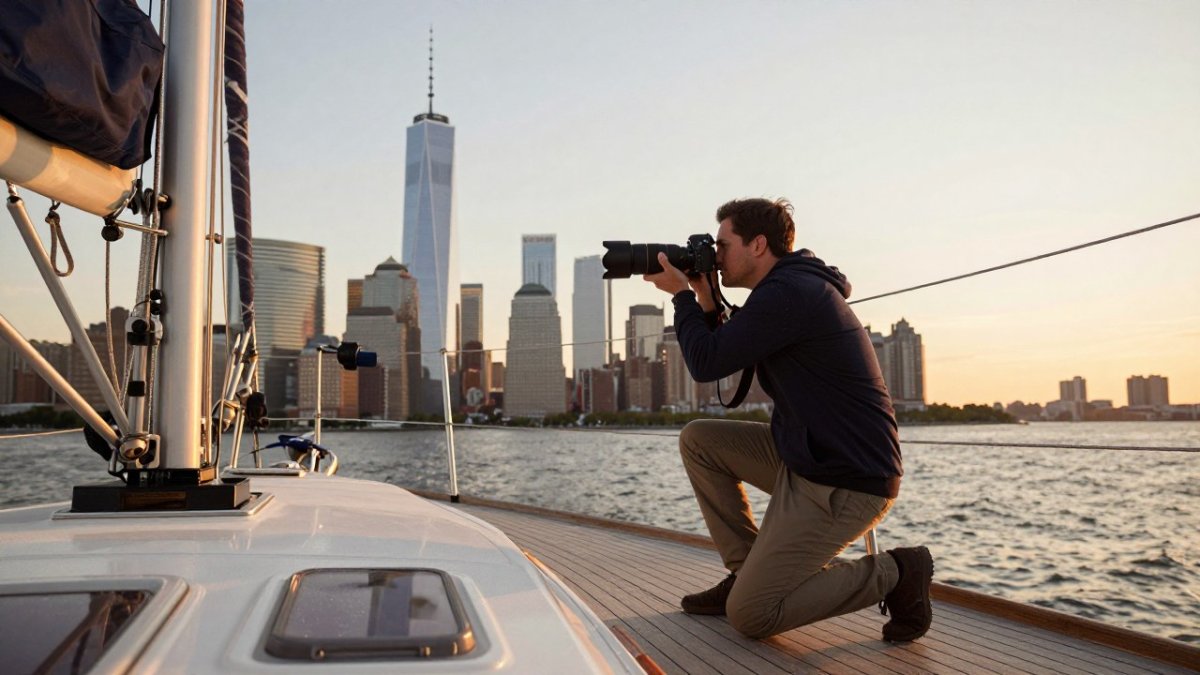
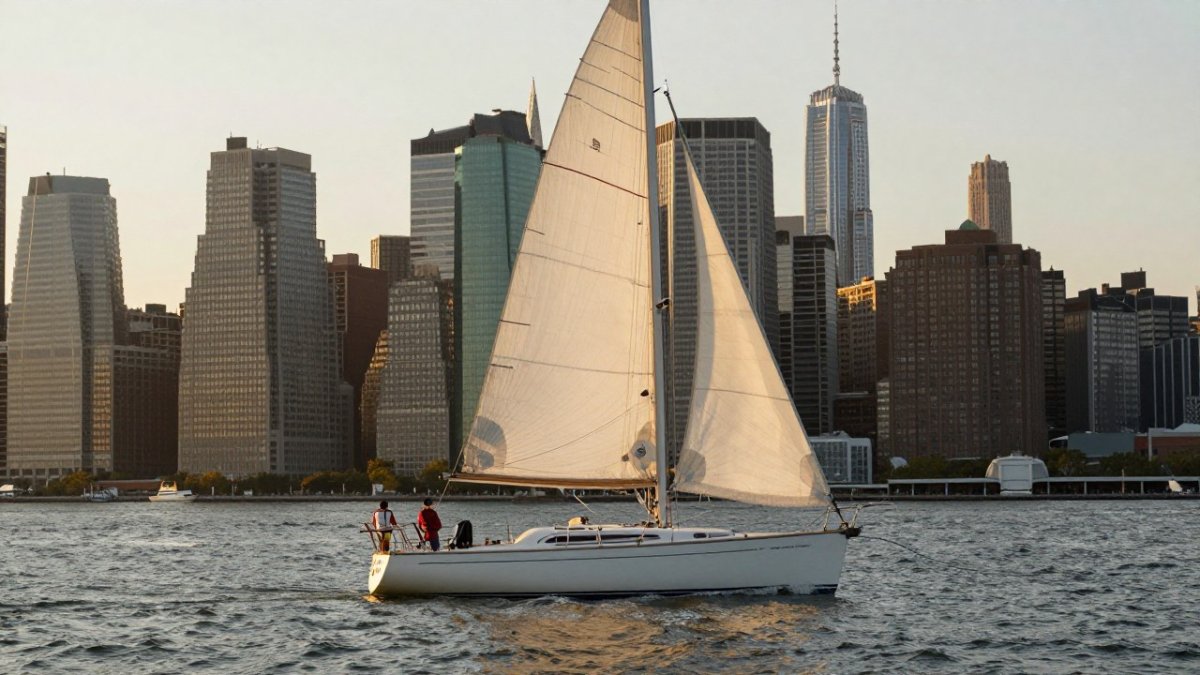
Golden hour is the hour or so around sunrise and sunset, when the sun sits low and the light turns warm (photography). Shadows stretch long and soft, and skin tones look natural. For harbor shots, this is usually the most flattering time to photograph people on deck and the water around you.
Start setting up before the sun gets low. Watch for the sun angle relative to the skyline so you aren't shooting straight into it, unless you want a silhouette. For specific spots to catch the sunset, see our curated list of best sunset locations in the harbor. A common mistake is waiting until the sun is almost down, then rushing to get shots while the light fades in minutes.
Here's a simple way to plan your window:
- Check the sunset time for your date
- Begin shooting before sunset
- Keep shooting for a short time after the sun dips below the horizon
- Watch for color in the sky, which often peaks after sunset
Watch out: the water can throw glare right back at your lens during golden hour. Keep your lens angled away from the sun's direct reflection.
Blue Hour Skyline Photography from a Boat
Blue hour comes after sunset, when the sky turns deep blue and the city lights switch on. For skyline angles seen from the water, check our NYC skyline views from the water guide. This is when the Manhattan skyline really shines. Windows light up, bridges glow, and the water picks up reflections. Many harbor photographers consider it the best time for dramatic city shots.
Blue hour is shorter than golden hour, and the light changes quickly. Plan to start shooting as the sky darkens and the lights come on.
Sun Direction, Harbor Orientation and Backlighting
The sun's position relative to the skyline changes everything. Shooting with the sun behind you lights up the buildings and gives clean, bright color. Shooting toward the sun creates backlighting, which can produce strong silhouettes or glowing edges around people and sails.
Harbor orientation matters too. Depending on where your route takes you, the skyline may face the sun in the morning and fall into shadow in the afternoon. Before you go, check which direction the buildings face and when the sun will hit them. This simple check can change where you position the boat for your best shots.
Harbor Photography Camera Settings for a Moving Platform
A boat never stays perfectly still, so your camera settings need to account for motion. Use a faster shutter speed to freeze movement, even if that means raising your ISO a bit. Turn on burst mode for moving subjects and shoot the same composition several times. The extra frames give you a better chance at one sharp, well-framed image.
Here are a few general starting points for shooting on a moving boat:
- Shutter speed: a faster shutter speed helps freeze motion
- ISO: raise it as needed to keep your shutter speed high
- Aperture: a mid-range aperture helps keep skyline detail sharp
- Focus mode: continuous autofocus suits moving subjects
How to Reduce Glare in Boat Photos
Glare on water is one of the most common problems on the harbor. It washes out color and hides detail. A polarizing filter helps cut reflections from the surface, especially when you shoot at an angle to the water. Position yourself so the sun isn't directly reflecting off the water toward your lens.
Shade your lens with your hand or a lens hood when the sun is low. And if you can, pick times when the surface is calmer, since choppy water creates more glare and scatters light in every direction.
Booking Your Private Harbor Photography Sail with City Light Sailing NYC
If you want to plan your own harbor photography outing, a private sail can give you more flexibility over timing and route. Here is a step-by-step guide to booking a private sailboat in NYC. For current availability and a quote, visit the City Light Sailing NYC website and share which window matters most to you, whether that's golden hour, blue hour, or both. You can schedule your private yacht rental directly on the appointments page.
Ready to plan your shoot on the water? Schedule your private harbor sail with City Light Sailing NYC and let the skyline do the rest.
Frequently Asked Questions
What time of day is best for harbor photography from a boat?
Golden hour, roughly the first hour after sunrise and the last hour before sunset, is usually the best window for harbor photography from a boat. The light is warm, directional and soft, which flatters the water, sails and skyline. Plan to be on the water before sunset so you can shoot as the light changes. Midday sun is typically harsh and produces strong glare off the water, so it is the least favorable time for most harbor images.
Is golden hour or blue hour better for harbor and skyline photos?
Golden hour is better for warm, glowing images of sails, people and the water, while blue hour is better for skyline photos where city lights balance against a deep blue sky. Many photographers shoot both in one outing, starting at golden hour and staying on the water through blue hour. Blue hour typically lasts about 20 to 40 minutes after sunset, so keep your camera ready and adjust exposure as the sky darkens.
How does the direction of sunlight affect harbor photography?
Sun direction determines how light falls on your subject and whether you get glare. Shooting with the sun behind you lights the skyline and sails evenly, while backlighting creates silhouettes and glowing edges that can look dramatic. Side light adds texture to water and sails. Because your boat moves, check how the sun sits relative to the harbor orientation as you travel, and adjust your route when possible to keep the light working for you.
How can you reduce glare and reflections when taking photos from a boat?
Use a circular polarizing filter to cut surface glare on water and reduce reflections on windows and glossy surfaces. Position yourself so the sun is not reflecting straight back toward the lens, and shoot slightly off the angle of the reflection. Shooting during golden hour or after sunset also naturally reduces glare. Keep your lens clean, and shade the lens with your hand or a hood when the sun is low in the frame.